
Enterprise Previous-Resident Sources
An address history becomes stronger when each source is assigned to the era and fact it can support. Current parcel cards provide the opening deed pointer. Recorded instruments extend owners backward. Directories and telephone books add dated names, the census adds households, and Sanborn maps show the site rather than its people. Enterprise has no verified public utility-hookup archive, street-renumbering chronology, or complete criss-cross run.
| Source | Years it covers | Where held | What it shows |
|---|---|---|---|
| Current parcel and GIS | 2025 roll | Coffee or Dale GIS | Owner, mailing and situs fields, building, deed pointer |
| Online deed index | Current; start not published | County Probate | Parties, instrument, book, page, date |
| Enterprise directory editions | Selected 1957 to 2000 | ADAH LPR104 boxes | Name and address after checking each volume |
| Telephone books | Runs from 1946 to 1987 | Library of Congress | Listed subscriber, address, telephone |
| Federal census | Public through 1950 | NARA, ADAH, FamilySearch | Household members and relationships |
| Sanborn maps | 1905, 1910, 1929 | Library of Congress | Footprint, use, street and numbering context |
| Permits | Current forms; historic cutoff unknown | Enterprise Engineering | Work, date, applicant, contractor |
| Probate and obituaries | Series-specific | Probate, newspapers, Pea River | Estate, heirs, death endpoint |
For a recent Enterprise address, start with GIS and Probate. For a mid-century trail, pair deeds with the nearest available directory or telephone-book date. Before the public census cutoff, the legal description and map sheet may be needed to bridge changes in the street line.
Trace Enterprise Past Residents
The deed chain starts with today’s parcel card, not a guessed name. First confirm whether the land is in Coffee or Dale County. Record the current assessed owner, physical address, separate tax-mailing address, parcel, subdivision, legal description, and deed book, page, and date. A legal description identifies land through its recorded terms and stays useful when the street address shifts.
- Find the address in the correct county GIS and save every land key and the current deed pointer.
- Open the matching Probate portal. Search the cited book and page to identify the recorded instrument and both parties.
- Take the seller, or grantor, from that deed. Search that person as a grantee in earlier dates to locate the prior acquisition.
- Repeat the party search backward, checking the parcel or legal description each time so a same-name party does not break the chain.
- When online coverage ends, use the direct and reverse indexes and deed books at the county counter, then check ADAH microfilm by county and record type.
- Grantor and grantee
- The grantor gives or sells an interest; the grantee receives it.
- Chain of title
- The linked series of recorded transfers for the same tract.
- Legal description
- The recorded wording that identifies the land through lot, block, subdivision, survey, or other formal terms.
- Deed pointer
- The book, page, and date on a parcel card that directs a searcher to the recorded instrument.
A deed documents a transfer of ownership, not who slept at the address. Keep the ownership chain as one layer, then test it against dated household sources.
Enterprise Past-Resident Probate Trails
Most Enterprise land lies in Coffee County, but an address on the Dale side belongs in Dale Probate’s chain. Coffee’s official records gateway offers free search and view. All online research requires a free account beginning August 1, 2026, while prints or downloads cost $2 per page. The exact online start year remains unpublished, so a no-result must lead to the counter rather than a claim that no deed exists.
The Coffee records capture shows the official route for present and prior owners.
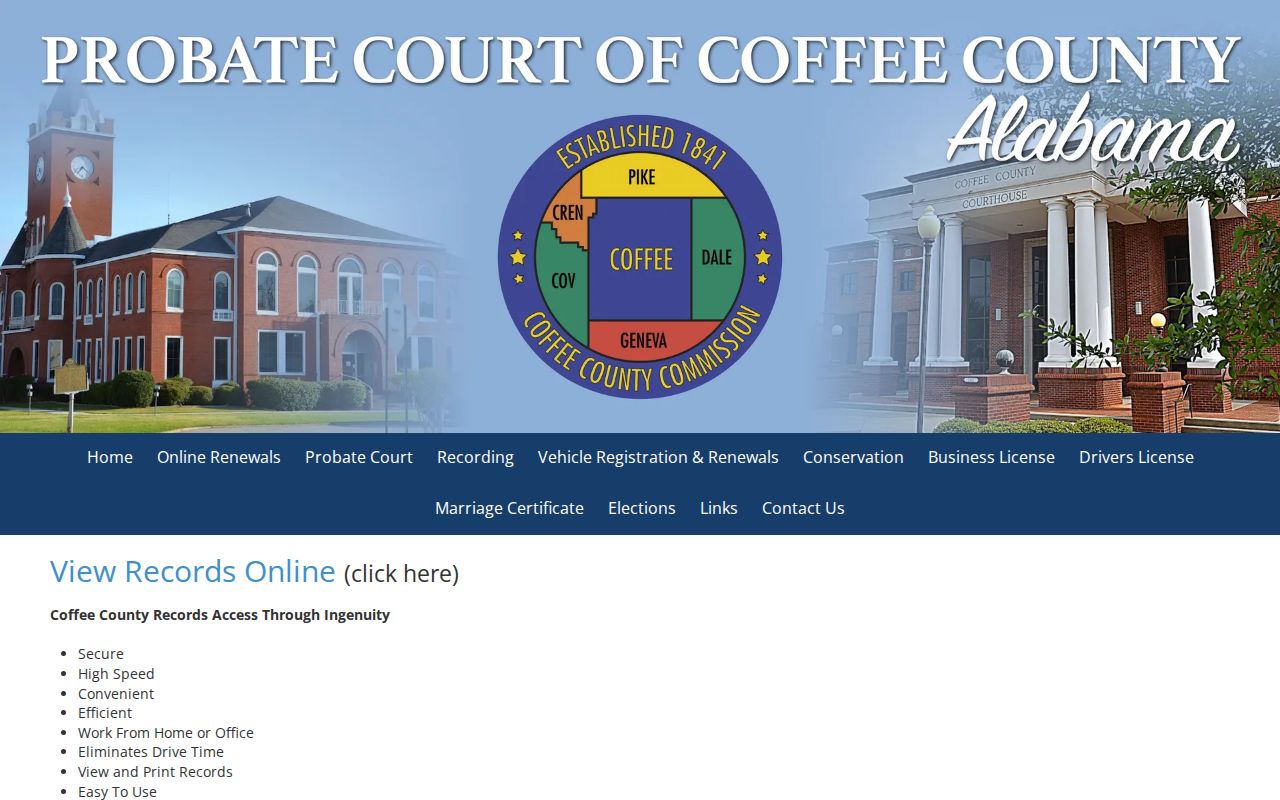
It anchors the online stage, but the Enterprise office at 101 S. Edwards Street and the Elba office remain the fallback for books, indexes, and division questions.
Coffee notation can prevent a false dead end. Elba property books carry A markers, while Enterprise books do not. Elba probate cases begin PC; Enterprise cases begin PR. Preserve these marks when copying a citation or asking staff to retrieve an older record.
Dale-Side Enterprise Previous Residents
An Enterprise mailing name does not prove Coffee County jurisdiction. For an eastern or southeastern parcel, check Dale Probate’s online-record gateway. Dale supports index and book/page searching, document viewing and printing, and open-estate index work. Its full fields, fees, and cutoff were not exposed in the research, so the Ozark counter is the authoritative fallback. The official gateway capture shows where a Dale-side address history begins.
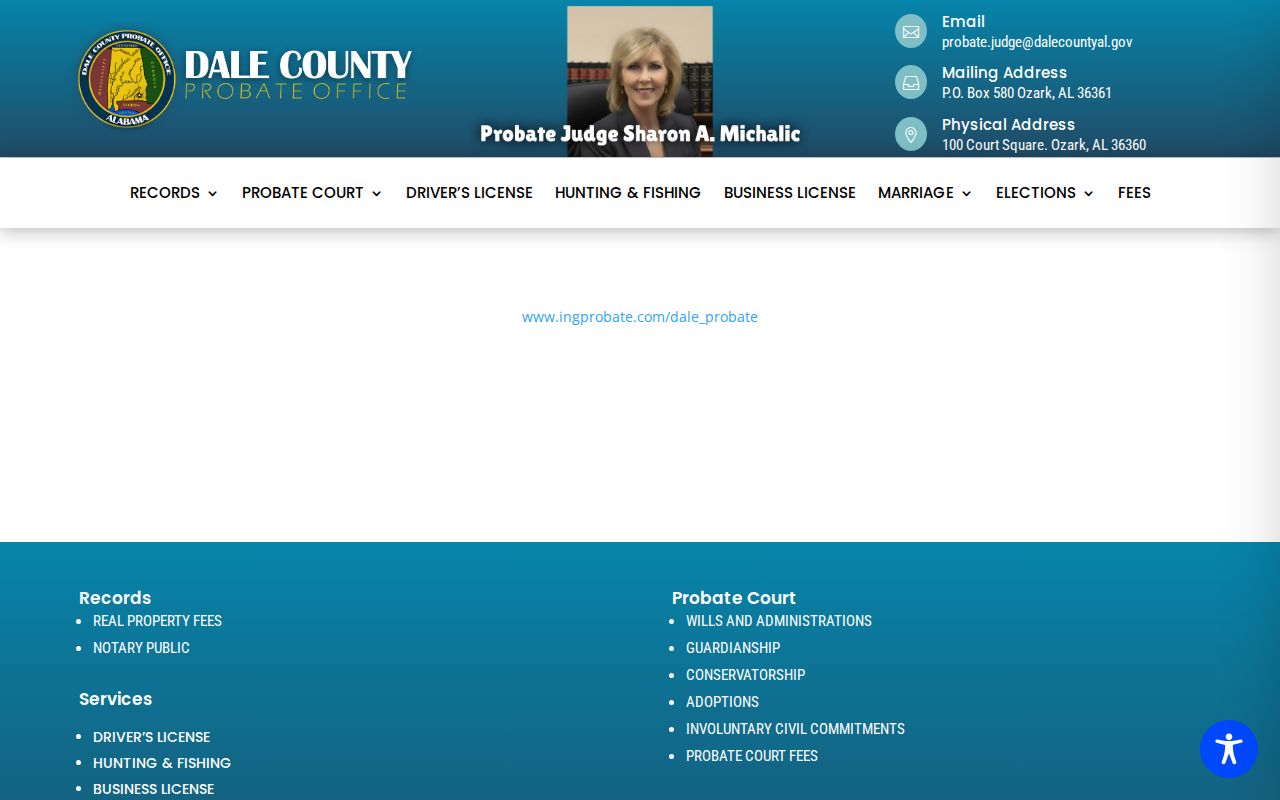
Resolve the parcel in Dale GIS first, retain its deed citation, and then enter the recorded-record channel. The Dale Ingenuity portal is the direct land-record application shown next.
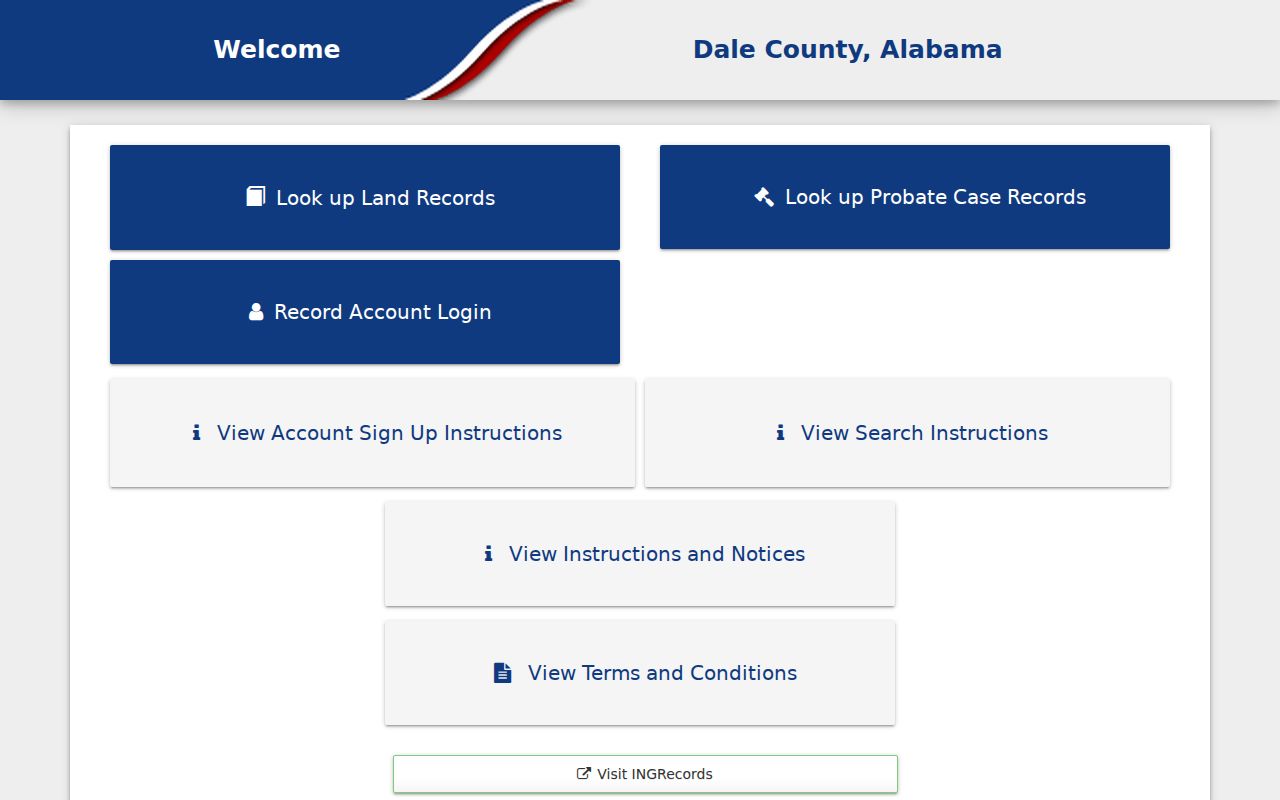
The app gate does not publish enough detail to promise a cutoff or copy price. When the index does not reach an older instrument, contact Dale Probate at 100 Court Square in Ozark, 334-774-2754.
Note: Search Coffee and Dale before treating an Enterprise deed as missing; ZIP and postal city names do not settle county custody.
Enterprise Past-Resident Households
Ownership is only half of a previous-residents search. A household member may never appear in the deed. Enterprise directory editions listed by ADAH span selected years from 1957 through 2000, while Library of Congress telephone-book runs cover periods from 1946 through 1987. The inspected phone page gives an alphabetical name, an “r” residence marker, street address, and number. It does not prove that all volumes list a spouse, occupation, or ownership status.
- Record the person, spelling, address, phone, and edition date exactly as printed.
- Check the nearest earlier and later available editions. Note a move or disappearance without assuming its cause.
- Pair a 1950-or-earlier address with the public federal census, then confirm household members and relationships on the enumeration.
- Return to deeds for the landowner and to probate, newspapers, or cemetery material for a death or heir trail.
The collection lists and entry conventions are handled in depth on the Enterprise city directory page. Here, each edition serves as one dated link in the backward address chain. Absence may mean an unlisted phone, publication gap, omission, or move, not proof that a person was gone.
Map Enterprise Past-Resident Addresses
Digitized Sanborn fire-insurance maps give Enterprise three early snapshots: July 1905, April 1910, and November 1929. They show building footprints, use, construction context, streets, and numbering. They do not name residents. Compare the deed’s legal land with a map sheet and a dated directory or census before assigning a person to a building.
The city’s 1898 business-district fire creates an important divide. Much of the commercial core burned, and the depot built in 1903 became a durable landmark. An address claim that crosses that period needs more than a modern street number. Deeds, plats, Sanborn sheets, and local newspaper or photograph files can show whether the building and the address system line up.
The 1929 Enterprise Sanborn map is free online. Earlier sheets for 1905 and 1910 are also digitized by the Library of Congress. Search the land first, then use the map as structural context.
Enterprise Records After Coffee Fires
Coffee County courthouses were destroyed by fire in 1851 and 1863. Those events warn against assuming a neat, unbroken nineteenth-century chain. They do not prove that every series vanished. Survival and reconstruction must be checked for the exact deed, probate, tax, or court series at issue.
The Alabama Department of Archives and History county-record catalog can be searched by Coffee County and a singular record type such as deed. Most originals remain with the office that created them. If Probate’s books and ADAH microfilm both show a gap, indirect evidence may include later deeds that recite earlier transfers, plats, tax material, probate files, and carefully dated local-history sources.
Short gaps should remain gaps. A family story or modern parcel outline cannot replace a missing instrument.
Close Enterprise Resident Trails
Enterprise permits can date a structure or alteration and may name an owner, applicant, plan submitter, or contractor. They do not enumerate previous residents. Citizen Self Service is login-gated, so use Engineering’s counter or email and ask narrowly for the permanent permit and inspection log. Plans may be held for only 180 days before disposal.
Probate estates and obituaries can close a trail when a former owner or occupant dies. They may identify heirs, relatives, property, and the final community connection. The Pea River Historical and Genealogical Society keeps local books, microfilm, newspapers, and photographs at its research library behind the Depot Museum. Call ahead because no online box-level directory or obituary inventory was verified.
Enterprise City Cemetery has more than 2,000 markers transcribed by zone, name, dates, military service, inscriptions, and photographs through Pea River. A marker supplies death and memorial evidence, not a full residence history. Link it back to a deed, directory entry, census row, or obituary.
Use Enterprise Address History Responsibly
House history, family research, heir questions, and preservation work are sound reasons to trace who lived here before. Keep living people’s details to the minimum needed. An old directory image can contain data that should not be republished, and a public source does not erase protected status.
Correct errors with the source office. A wrong owner or address goes to county Revenue or Appraisal with deed or parcel proof. A wrong deed index or exposed field goes to the recording Probate office with an instrument or book and page. Commercial removal does not alter the underlying public record.
Lawful use. Trace Enterprise previous residents for legitimate personal research. Never use an address trail to stalk, harass, threaten, or expose a living person.